

> Overview
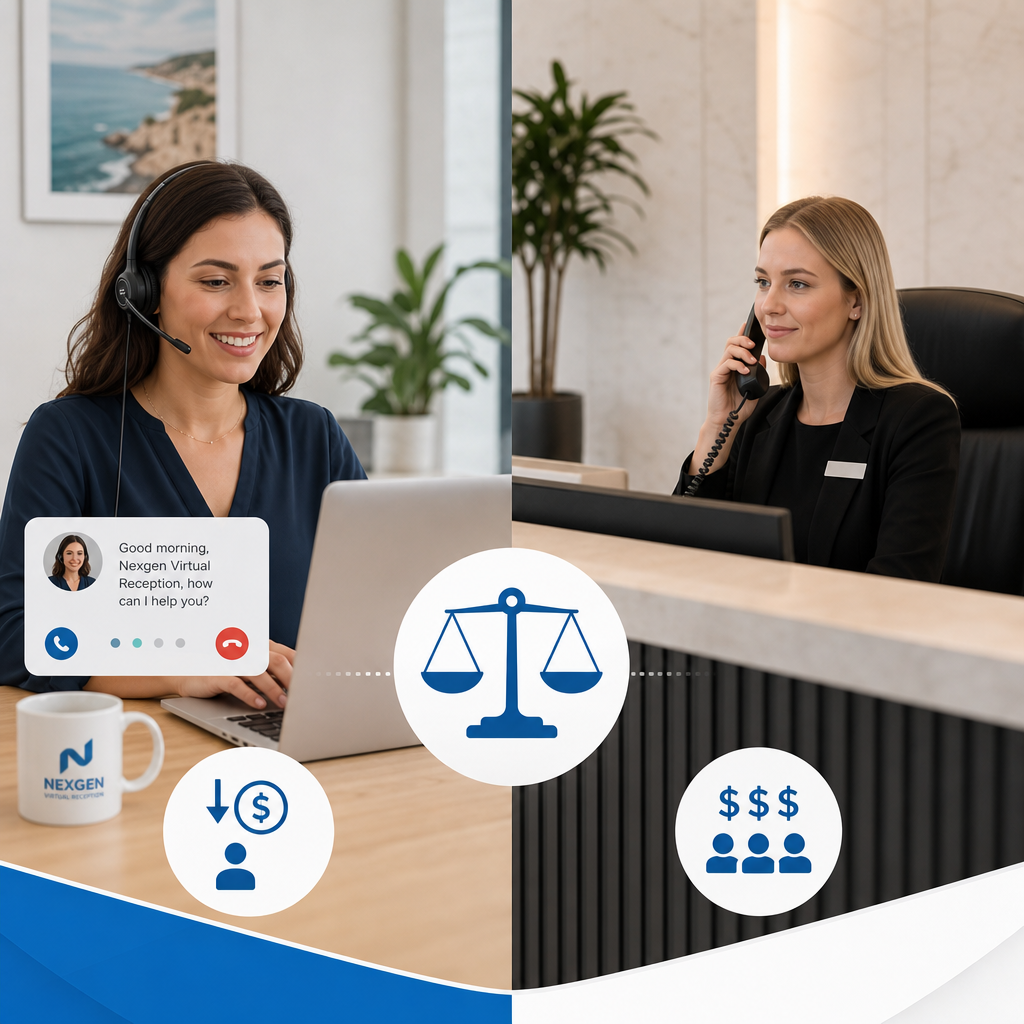
> A virtual receptionist Australia service answers business calls remotely for a fraction of a full-time salary, typically charged per call or per minute. It covers reception basics, greeting, screening, routing, but a full-time hire still wins on complex, in-person, or highly relationship-driven front-desk work.
Table of contents
- What is a virtual receptionist?
- How does the cost actually compare to a full-time hire?
- What does a virtual receptionist cover, and what does it miss?
- Is a virtual receptionist better than hiring in-house?
- Setting up a virtual receptionist service — what’s involved
- What to look for in a virtual receptionist provider
- FAQ
Hiring a full-time receptionist is a significant commitment for a small business, wages, leave entitlements, training, and a desk that needs covering every single working hour. For a lot of Australian SMBs, that cost simply doesn’t stack up against the call volume they actually get, a handful of calls scattered across the day rather than a phone ringing constantly.
A virtual receptionist Australia service is built for exactly that gap. Calls are answered by a remote receptionist (or, increasingly, an AI receptionist) integrated with your existing business number, without the overhead of a full-time role. The real question isn’t whether it’s cheaper, it almost always is, but whether it covers what your business actually needs from the front desk.
This guide breaks down the real cost difference, what a virtual receptionist genuinely handles well, and where a full-time hire still has the edge.
—
Business phone plans
See what a virtual receptionist would cost for your business
Compare it against hiring in-house, based on your actual call volume.
—
What is a virtual receptionist?
A virtual receptionist answers your business calls remotely, greeting callers, answering routine questions, taking messages, and routing calls to the right person, without sitting at a desk in your office. Some providers use trained human receptionists working off-site, others use an AI receptionist that handles the conversation using voice technology. Many services now blend both, AI for routine volume, a real person for anything that needs judgement.
Either way, the service integrates with your existing business number and phone system, so calls are answered under your business name exactly as if someone were sitting at your own front desk.
How does the cost actually compare to a full-time hire?
A full-time receptionist’s cost isn’t just their salary. It’s wages, superannuation, leave entitlements, training time, a workstation, and management overhead, and that cost applies whether the phone rings once an hour or fifty times a day.
A virtual receptionist is typically priced per call, per minute, or as a tiered monthly plan based on call volume. For a business with moderate call volume, that structure usually works out significantly cheaper than a full-time wage, because you’re paying for calls actually handled, not for a person sitting idle between them.
The trade-off is coverage type, not just price. A full-time receptionist can also do filing, greet visitors in person, and handle office admin between calls. A virtual receptionist does one job, answering the phone, but does it around the clock rather than just during rostered hours.
What does a virtual receptionist cover, and what does it miss?
Covers well:
- Answering calls promptly, including after hours and on weekends
- Screening and routing calls to the right person or team
- Answering routine questions (hours, location, services)
- Taking messages and basic appointment bookings
- Overflow handling when your in-house team is busy
Doesn’t cover:
- Greeting visitors who walk in the door
- General office admin, filing, mail, supply orders
- Complex or sensitive conversations needing in-person judgement
- Tasks unrelated to answering the phone
If your “receptionist” role is really just about answering the phone well, a virtual receptionist covers the job fully. If the role also involves front-of-house duties and general office support, you’re comparing two genuinely different things.
Is a virtual receptionist better than hiring in-house?
| Virtual receptionist | Full-time in-house hire | |
|---|---|---|
| Cost structure | Per call, per minute, or tiered monthly plan | Salary, super, leave, training, overhead |
| Hours of coverage | Often 24/7, including after hours | Limited to rostered working hours |
| In-person tasks | Not covered | Covered (greeting visitors, office admin) |
| Consistency | Same greeting and process every call | Can vary with staff mood, workload, sick days |
| Scalability | Scales with call volume automatically | Requires hiring more staff to scale |
| Best suited to | Businesses with moderate call volume, no walk-in traffic | Businesses needing a genuine front-of-house presence |
For most small businesses without regular walk-in customers, a virtual receptionist covers the actual job at a fraction of the cost. Businesses that rely on in-person reception, a busy clinic waiting room, a showroom, still get more value from a person at the desk, potentially paired with a virtual receptionist for after-hours and overflow coverage.
Read more: AI Receptionist for Business: How It Works and What It Replaces →
Setting up a virtual receptionist service — what’s involved
- Assessment – a provider reviews your call volume, common enquiry types, and business hours to scope the right plan.
- Script and knowledge setup – your business hours, services, and FAQ answers are configured so calls are handled accurately from day one.
- Integration with your phone system – the virtual receptionist connects to your existing business number, so calls route to it without customers noticing any change.
- Escalation rules configuration – rules are set for when a call needs to be transferred to you or a staff member directly.
- Testing before go-live – calls are tested to confirm greetings, routing, and message-taking work correctly before it takes live calls.
- Ongoing refinement – scripts and routing rules are adjusted over time as you see what callers actually need.
What to look for in a virtual receptionist provider
1. Transparent, volume-based pricing. Understand exactly what’s charged per call or per minute, and what happens if your call volume spikes in a busy month.
2. Genuine integration with your phone system. Confirm the service connects to your existing business number rather than requiring a separate line.
3. Clear escalation rules. Ask how and when calls get transferred to your team, and how easily those rules can be adjusted.
4. Local, Australian-based service. Callers can usually tell the difference between a receptionist who understands local context and an overseas call centre reading a script.
5. Flexibility to scale. Check whether the plan adjusts easily as your call volume grows, without needing to renegotiate the whole contract.
FAQ
Is a virtual receptionist cheaper than hiring a full-time receptionist?
Usually, yes. Virtual receptionist services are typically priced per call or per minute, which works out considerably cheaper than a full-time wage for businesses with moderate call volume.
Can a virtual receptionist handle all my business calls?
It can handle the reception basics well, greeting, screening, routing, and message-taking, but it won’t cover in-person duties like greeting walk-in visitors or general office admin.
Does a virtual receptionist work with my existing phone number?
Yes. A virtual receptionist typically integrates with your existing business number and phone system, so customers dial the same number they always have.
What’s the difference between a virtual receptionist and an AI receptionist?
A virtual receptionist can be a human working remotely, an AI-powered system, or a blend of both. An AI receptionist specifically uses voice technology to handle the conversation automatically.
Can I use a virtual receptionist just for after-hours calls?
Yes. Many businesses use a virtual receptionist specifically to cover after-hours and overflow calls, while keeping an in-house team for daytime reception.
How do I know if a virtual receptionist is right for my business?
If your receptionist role is mostly about answering the phone well rather than in-person front-of-house duties, a virtual receptionist usually covers the job at a lower cost. If walk-in traffic is a big part of the role, it’s worth weighing that against an in-house hire.
Get the coverage without the overhead
A virtual receptionist won’t replace every part of an in-house front-desk role, but for the core job of answering calls promptly and professionally, it typically costs far less than a full-time hire while covering more hours.
Nexgen has helped Australian businesses set up virtual and AI receptionist solutions for 17 years, with local support and a setup process built around your actual call volume. Get in touch with our team or call 1300 020 402 to see what it would cost for your business.